How to Know When You Need Storefront Glass Replacement
Walking into your business and seeing a crack running across the front glass is one of those moments that stops your morning cold. It might be a hairline fracture from a temperature swing or something more dramatic like shattered glass from a delivery accident. Either way, your storefront is the first thing customers see, and damaged glass signals neglect, even if that is the last thing you want to project. Knowing when to call for storefront glass replacement can save you money, keep your space secure, and avoid bigger problems down the road.
What Makes Storefront Glass Different From a House Window
A lot of people assume that the glass in a storefront is basically a bigger version of what they have at home. That is not quite right. Most commercial frontages use tempered glass or laminated glass because those materials handle impact better and break in safer patterns. Tempered glass shatters into small granular pieces rather than long shards, which matters if someone walks into it or if a windstorm throws debris. Laminated glass has a plastic interlayer that holds the glass together even after cracking, so it stays in the frame until you can schedule a replacement. A standard single-pane window from a house does not offer that same level of safety or durability.
The framing matters too. Storefronts often use aluminum frames because they resist rust and stand up to weather without warping. Wooden frames and vinyl frames show up in residential work, but commercial spaces usually go with aluminum for longevity. When you start looking into storefront glass replacement, the frame condition becomes part of the decision. If the frame is bent or corroded, replacing just the glass might not be enough to get a good seal.
Signs That You Need More Than a Patch Job
A small chip can sometimes be filled with resin, but there are clear signs that a full replacement is the right call. Cracks that run from the edge of the glass inward almost always mean the whole lite needs to go. Edge damage weakens the structural integrity of the panel, and even if it looks stable for a while, a temperature change or a gust of wind can turn that crack into a full break.

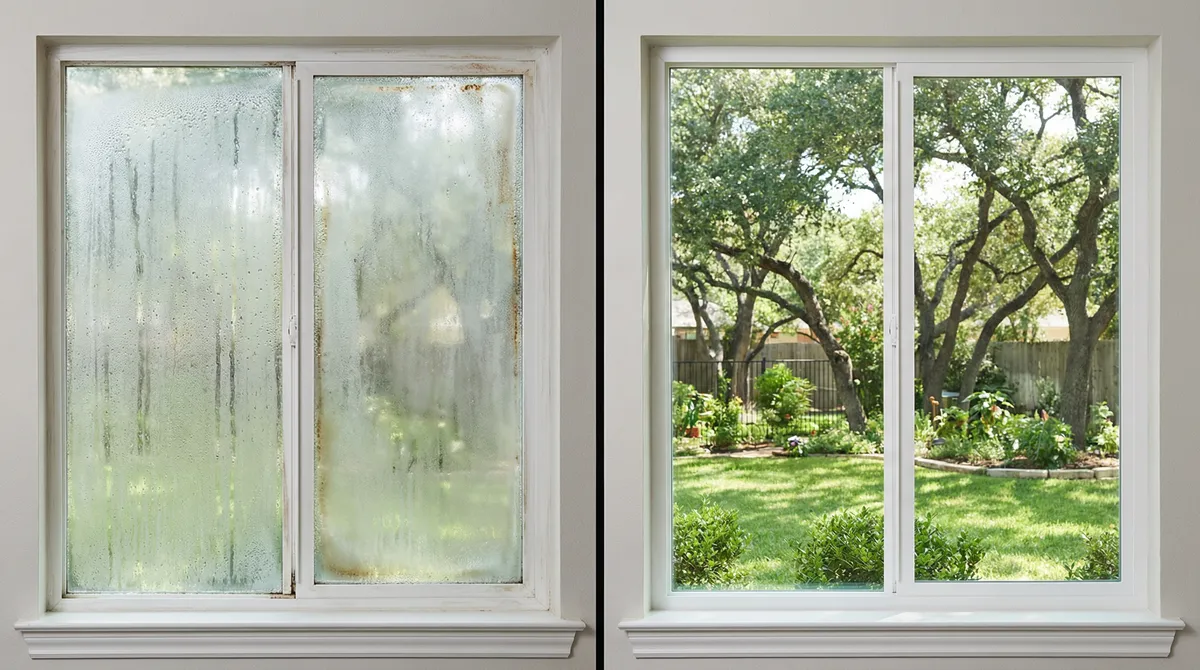
Foggy glass is another big clue. If your storefront has double-pane units and you start seeing condensation or a cloudy film between the panes, that is a seal failure. The insulated glass unit, or IGU, relies on a tight seal to keep Argon gas or dry air trapped between the panes. That gas layer gives you thermal performance and prevents heat transfer. When the seal fails, moisture gets in, and you end up with that foggy look that ruins the appearance of your frontage. Sometimes you can see the desiccant beads inside the spacer if the seal has been gone long enough. At that point, the IGU is dead. There is no way to dry it out or reseal it on site. You need a new unit.
I have seen building owners try to live with foggy glass for months because they think it is just cosmetic. But the real cost shows up on the energy bill. A failed IGU loses its insulating value, so your HVAC system works harder. In a climate like Dallas-Fort Worth, where summer heat is relentless, that translates to real money. Replacing those units with fresh energy-efficient glass, especially Low-E glass, cuts the heat load noticeably and makes the space more comfortable for customers and staff.
What Happens During a Replacement
A professional storefront glass replacement usually starts with measuring the opening and ordering the correct IGU or single panel. If the old unit was dual-pane and the new one is also dual-pane, the installer will check the spacer width and the type of butyl tape used on the original seal. Butyl tape is the primary sealant that holds the glass to the frame and keeps air and water out. If the old tape has dried out or cracked, the installer will scrape it clean and apply fresh tape before setting the new glass. Skipping that step is a shortcut that leads to future leaks.
The glass itself gets set into the frame with setting blocks at the bottom to distribute the weight evenly. Then the installer applies pressure and locks the glazing beads or stops back into place. For safety glass, the glass usually has a permanent marking that identifies it as tempered or laminated. That marking should be visible in the corner of the panel after installation. If it is not, ask about it. You want to know that the glass in your door or front window meets code.
Cost Factors That Actually Matter
People often ask me what a job like this costs, and the honest answer is that it depends on several variables. The size of the panel is the biggest one. A small transom window above a door is going to be a lot cheaper than a full-height storefront panel. The type of glass matters too. Tempered glass costs more than annealed glass because of the heat treatment process. Laminated glass adds even more because of the interlayer. If you want Low-E coating for energy savings, that adds a bit, but it pays back over time in reduced cooling costs.
Another factor is accessibility. If the glass is on the second floor or behind a fixed obstruction, the labor goes up because the crew needs specialized equipment. I have done replacements where we had to bring in a crane just to lift a heavy IGU into place. That is not common for a standard storefront, but it happens. The frame condition also plays a role. If the aluminum frame is in good shape, the installer can reuse it. If it is bent or corroded, you are looking at a frame replacement on top of the glass, which doubles the scope of work.
A glass warranty is worth considering when you are shopping around. Most reputable installers offer a warranty on the workmanship, typically one to five years, and the glass manufacturer usually provides a separate warranty on the IGU itself against seal failure. Make sure you know what is covered. Some warranties only cover manufacturing defects, not damage from impact or improper handling. Read the fine print before you sign.
When to Call a Pro vs. DIY
I have met a few handy business owners who tried to replace their own storefront glass. It rarely ends well. The main issue is that storefront glass is heavy, and handling a large panel without a suction cup lifter or a proper crew is dangerous. One slip and you have a broken panel and a potential injury. There is also the framing detail. Commercial aluminum frames have specific tolerances, and if you cut the glass even a quarter inch too big, it will not fit. Too small, and the glazing tape cannot hold it securely. A professional crew has the tools and experience to get it right the first time.
Another reason to call a pro is the disposal of the old glass. Shattered glass or a failed IGU cannot just go in the dumpster. Commercial glass is often tempered, which means it breaks into small pieces that are hard to handle safely. A licensed installer will haul it away and dispose of it properly. That saves you the headache of figuring out where to take it.
Long-Term Maintenance Tips
Once you have new glass in place, a little maintenance goes a long way. Check the perimeter seals once a year, especially after a hard winter or a hailstorm. Look for gaps or cracks in the silicone or butyl tape. If you see any, get them sealed before water gets behind the glass. Water intrusion is the number one cause of seal failure in IGUs. It also leads to mold and rot in wooden frames, though that is less common in commercial aluminum frames.

Keep the glass clean with a non-abrasive cleaner and a soft cloth. Avoid razor blades or harsh chemicals that can scratch the Low-E coating. If you have tempered glass, know that it is strong but not invincible. A direct hit from a rock or a piece of equipment can still break it. If you are in a high-traffic area, consider adding a protective film or a safety glass upgrade when you do your next storefront glass replacement. The film holds the glass together if it breaks, which keeps your space secure until you can schedule a full replacement.
Storefront glass replacement is not something you want to rush, but it is also not something you want to put off. A cracked or foggy frontage sends the wrong message to customers and costs you money in energy waste. If you are in the Dallas-Fort Worth area, the summer heat alone is reason enough to make sure your IGUs are in good shape. A fresh install with energy-efficient glass and a solid glass warranty gives you peace of mind and a better-looking storefront for years to come.